One morning, start to finish
The same Wednesday, from the first text at 5:47 to the plan going out at 7:06. Every person, group and number below is invented.
-
Step 01
What you start with
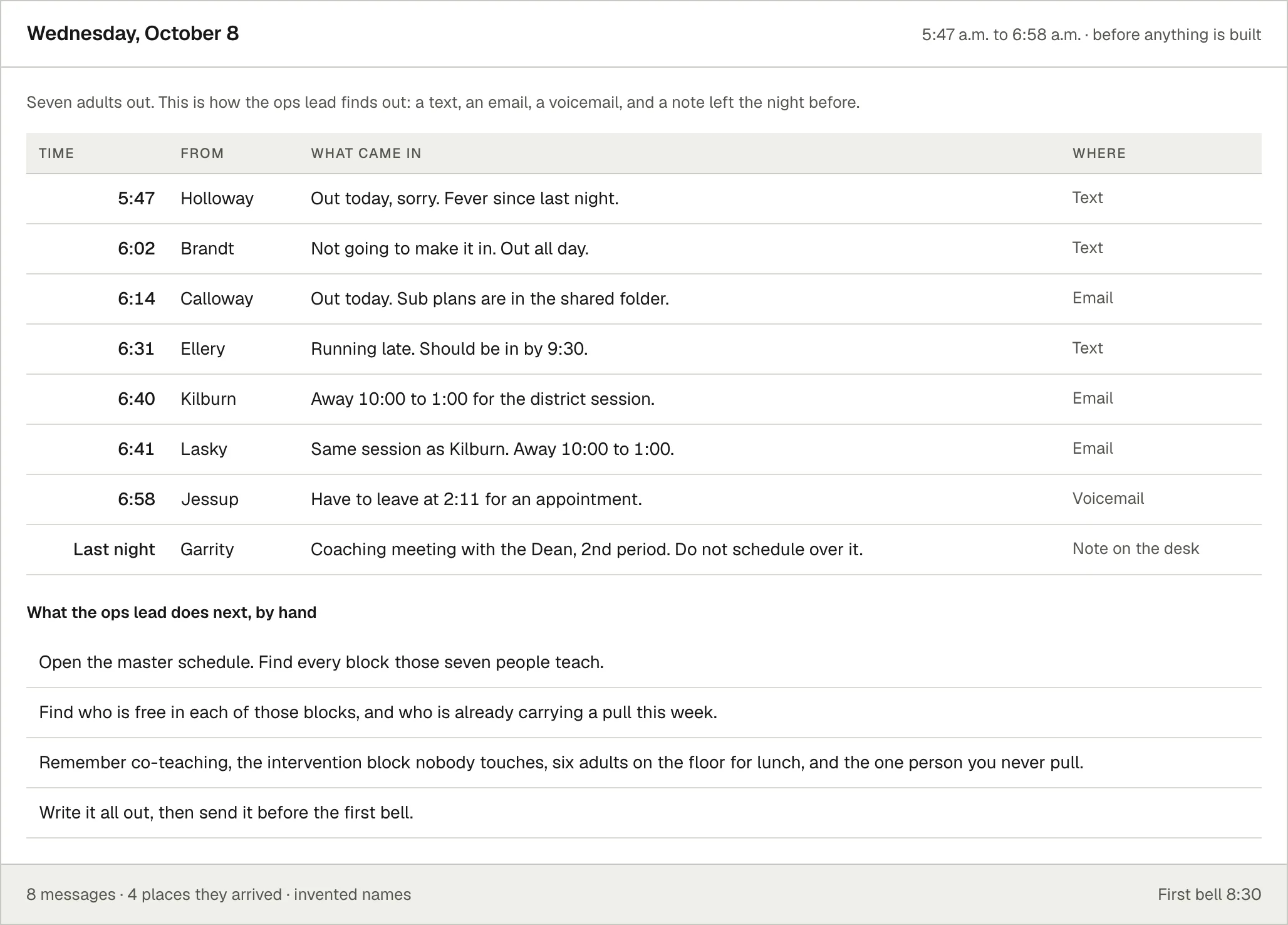
Seven adults out. A text at 5:47, an email, a voicemail, and a note left on the desk the night before. None of it is in one place, and none of it is a schedule yet.
Before anything can go out, somebody opens the master schedule, finds every block those seven people teach, works out who is free in each one, and keeps co-teaching, the intervention block nobody touches and six adults on the lunch floor in their head while they do it.
-
Step 02
What you type
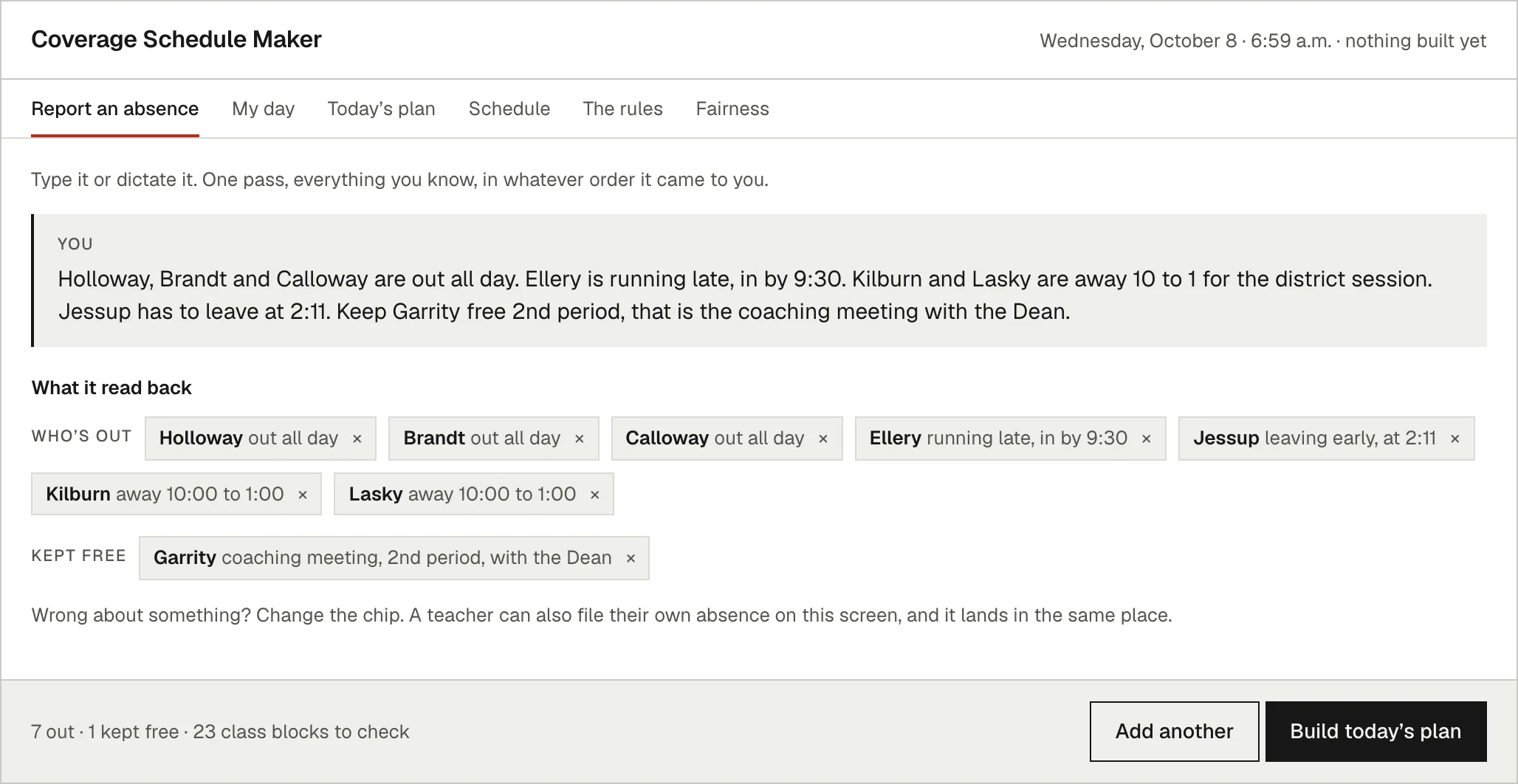
Someone calls out. Type or dictate who’s out. One pass, everything you know, in whatever order it reached you.
It reads the sentence back as chips you can correct, and it keeps what you told it to keep free. A teacher can file their own absence on the same screen, and it goes to the same place.
-
Step 03
What comes back
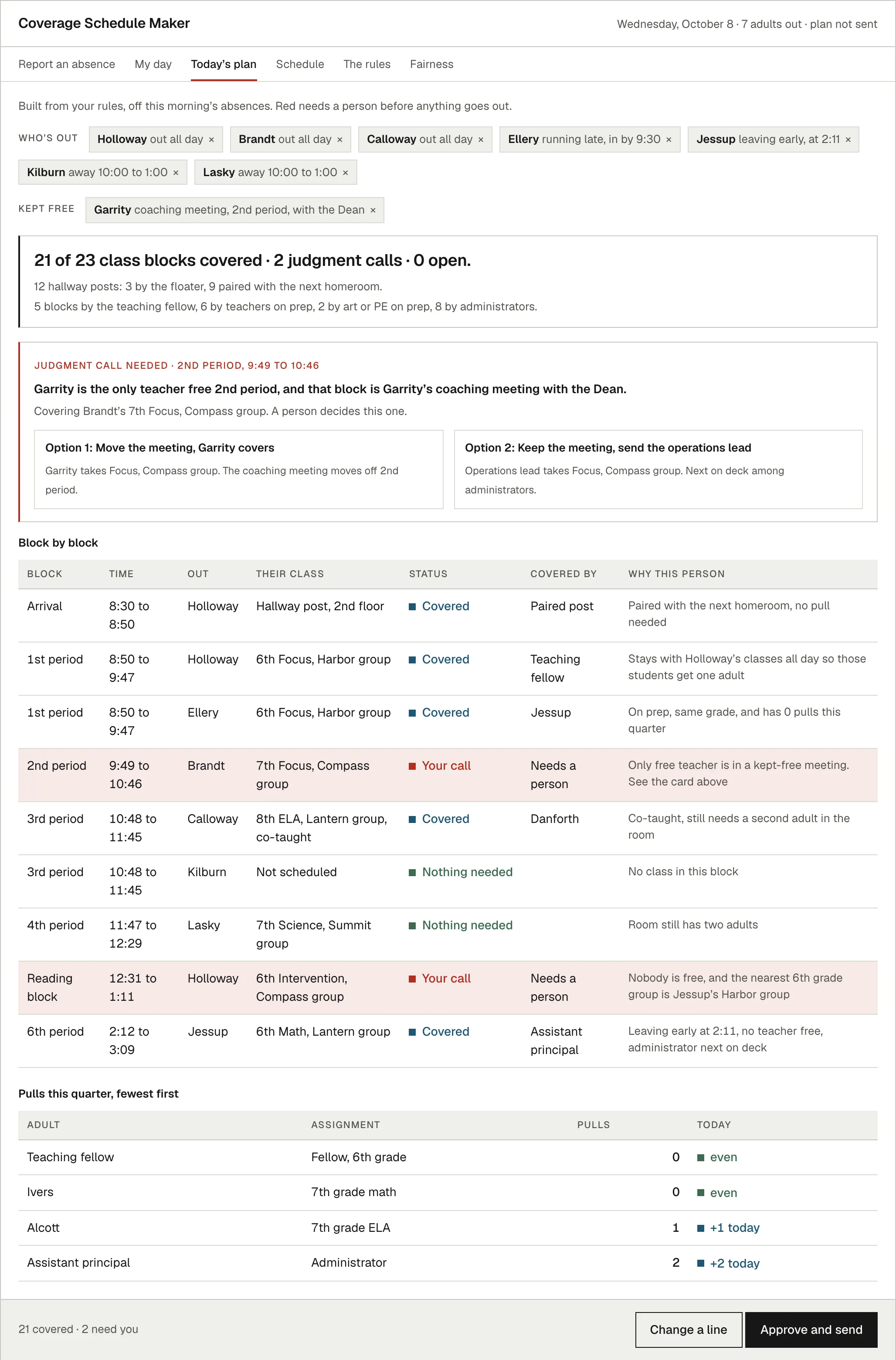
It builds the whole day’s coverage from very clear, specific rules you set up and can change. Co-teaching, intervention that’s sacred, six people on the floor for lunch, the person you never want to pull, no one teaching too many in a row.
It also makes coverage fairer, because it spreads the load equally. Every line says who is out, who covers, and why that person and not someone else.
-
Step 04
What a person decides
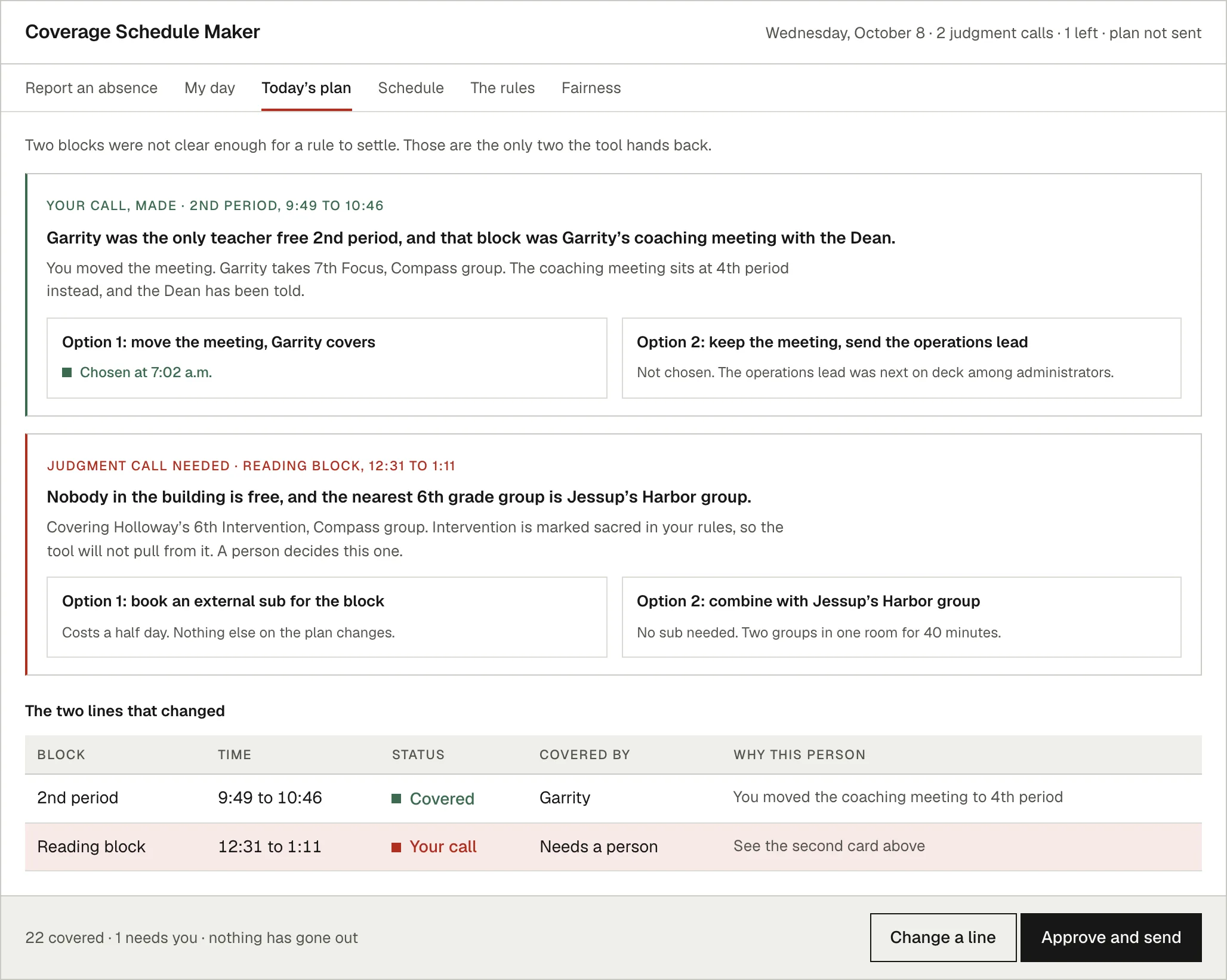
Anywhere it’s not perfectly clear, you get to choose, and nothing goes out until a person approves it. The computer just made your coverage schedule, and it says it has two places where it wants your judgment.
You take the two. The first one you settle by moving a meeting. The second one it will not settle for you, because intervention is marked sacred in your own rules and it will not pull from it.
-
Step 05
What goes out
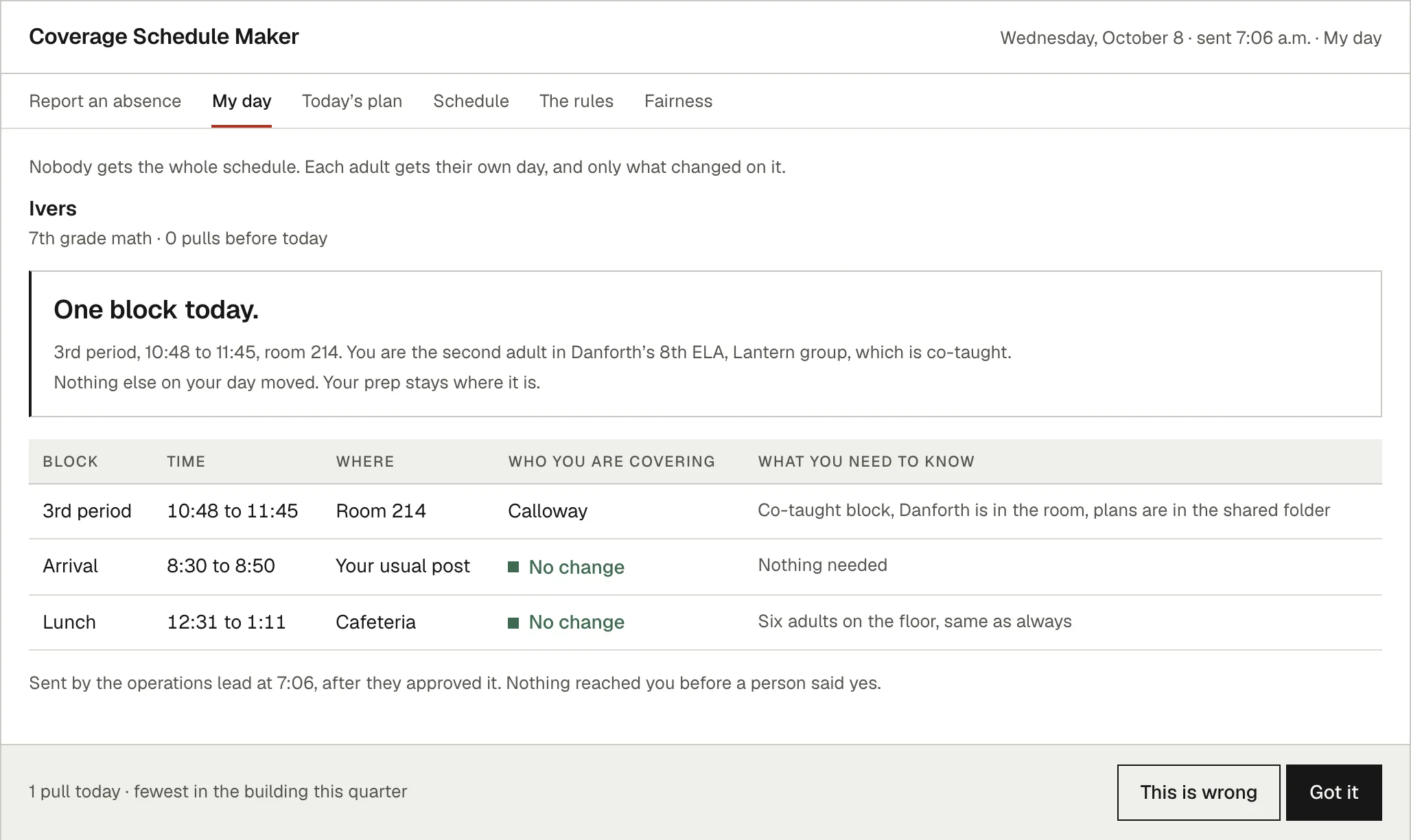
This is the one thing I need to worry about today on the coverage schedule. Nobody gets the whole plan. Each adult gets their own day, and only what changed on it.
It went out at 7:06, after a person approved it. Nothing reached a teacher before that.


How long it takes
Thirty minutes doing schedule Jenga, every single day. Forty-five minutes of cross-referencing on the days it’s bad.
On the other side: thirty seconds or so to type it in, a minute maybe to make some judgment calls, a couple of minutes to make sure this is right.
Setting up the logic takes about two hours, once. The rules are yours after that, and you change them yourself.
Built on two schools’ real master schedules.
This is the work. If your mornings look like this one, that’s a thirty minute conversation.
Book a 30 minute call (opens in a new tab)Or write me at chris@habetlerconsulting.com.